



When we talk about conversational agents, the first tool that comes to mind is the chatbot. This is a software program that simulates a conversation with humans. Chatbot-led discussions can take the form of text or voice notes. More and more companies are turning to this tool to optimize their online presence. Retailers, too, are turning to it, associating it with their instant messaging. In this article, we’ll shed some light on what a conversational agent is, and what it’s used for.
Chatbot definition
When we talk about a virtual conversational agent, we’re talking about a chatbot. This is the best-known form. So let’s start with the etymology of the word to better understand what it represents.
Etymology of the word
Chatbot is a contraction of two words: chat and bot. The former translates as “conversation, discussion in English” and the latter is the contracted form of “robot”. Based on this etymology, it’s a robotized chat program. It’s AI-based.
Simply put, a chat agent is the term used to designate a bot, an intelligent piece of software. It is designed to chat with Internet users. For a better simulation of the dialogue with the customer, companies often associate a human face with this type of application. The aim is to improve customer relationship management.
What is a conversational agent
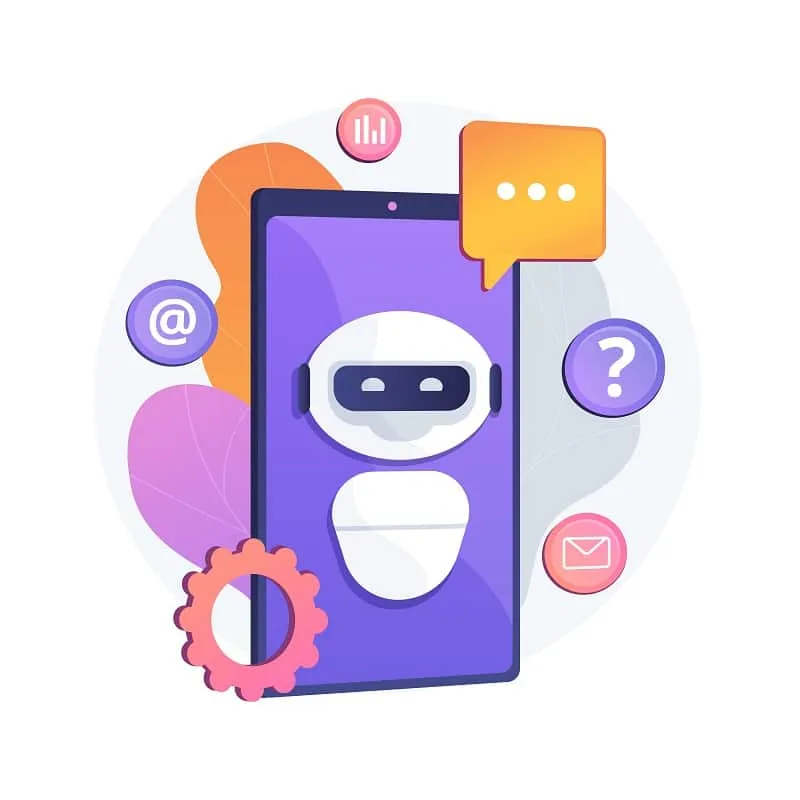
A chatbot is an automated communication device. It operates on the basis of natural, often written, language. On a website, the tool can take the form of a virtual agent. On a mobile application or messaging system, the chat bot will be a real assistant to optimize the customer experience.
The solutions provided by the device are generally customized and based on the customer’s profile. On the other hand, it remains available 24/7.
Conversational agents: the nuances
It’s important to distinguish between an intelligent chat agent and a chat bot. The former requires artificial intelligence for its operation, whereas the latter does not. The basic version of a discussion robot is based on a series of predefined questions and solutions. Generally speaking, the model is based on a decision tree. However, for greater autonomy, we recommend prioritizing the discussion bot on the basis of AI.
One variant of the chatbot is the voice chat agent. More commonly known as a voicebot. It’s a voice recognition and synthesis system. Communication with the target is by voice. Voicechat is based on automatic language processing, with the aim of informing and helping the user. Voicechat can be integrated into a website or Internet messaging application.
We can also talk about the callbot. This is a voice bot set up for the telephone channel. It’s a booming innovation aided by AI technology.
How the chatbot works
The chat robot provides solutions to the various questions asked by users. Your visitors will then be able to obtain useful information about your company. Better still, the discussion tool uses their emotions to make suggestions. To implement it, we generally integrate fairly sophisticated tools into the system. The aim is to make it an innovative, cutting-edge tool to keep up with the competition. As a result, it operates on a very strict basis.
First, the virtual assistant receives information stored in the database. This is analyzed to identify the user’s search intentions. In this way, the most relevant information is taken into account to provide solutions and answers to customers. The solution is usually predefined phrases.

Chatbots follow well-defined, automated rules and are based on user intent. The first types of chatbots work with keywords integrated into the tool. They are designed to trigger a solution (predefined expressions) as soon as the keywords are entered. This is the basic use of chatbots.
When it comes to chatbots powered by search intent, natural language is the most popular. Natural language processing and machine learning are also used. Here, processing is more personal and the customer experience is much richer.
The chatbot’s usefulness
There are many reasons to choose a virtual assistant for your company’s communications. As well as giving visitors a more complete user experience of your services, it’s an undeniable time-saver for the company.
Customer service, which is generally the bridge between visitor satisfaction and the achievement of the company’s objectives, needs to be supported. In fact, it is generally difficult to manage large numbers of visitors with pressing demands in a short space of time. In fact, for large companies, this is a very complex task. By implementing a virtual assistance solution, you can delegate some of your customer support tasks. In this way, the customer support team gains in efficiency, since it only has to intervene in specific cases.
The chatbot has the advantage of working every day and every hour. Thanks to it, prospects’ needs will be met in real time.
Beyond customer support, chatbots have now proven their effectiveness in many fields. As such, they are a perfect fit for inbound marketing. Subtly slipping a promotional offer into a chatbot, for example, significantly increases your chances of obtaining conversions as a complement to conventional e-mailing.
The chatbot is also effective as an information medium for informing your prospects and customers about a new product or service. Online payments and purchases are also made easier with this virtual assistant.
Last but not least, the chat bot lets you follow up a prospect’s purchasing decision until the transaction is completed. This is particularly useful in the hotel sector, where there are usually many cancellations following a decision to book a service.