




In short. A generative AI chatbot writes its answers instead of picking them from a list drafted in advance. It understands badly worded questions, it holds a conversation, and it can summarise a thirty-page document in three sentences.
Its two real issues are neither technology nor performance: they are control (a model left to itself invents answers, and the company is legally accountable for them) and usage-based cost, which moves with the number of generated messages. Both can be managed, provided you look at them squarely.
The calculator further down prices the monthly bill from Botnation’s public rates. And from 2 August 2026, Article 50 of the European AI Regulation requires you to tell visitors that they are talking to a machine.
The phrase “generative AI chatbot” actually hides three different questions. What does it change compared with the chatbot already answering on my site? Can I trust it in front of my customers? And how much does it really cost once traffic scales up?
The pages that dominate search answer the first one well and drop the other two. This article covers all three, with two tools that make things concrete: a comparator showing what three different bots answer to the same question, and a monthly cost calculator built on a published price list.

Generative AI chatbot: the definition, without the jargon
A generative AI chatbot is a conversational agent whose answers are produced by a large language model (LLM), not selected from a library of pre-written replies. With every message, it builds a brand new text, fitted to the question asked and to the thread of the conversation.
The distinction sounds technical. It is not: it decides everything else. A classic chatbot can only answer questions someone anticipated. A generative chatbot answers questions nobody planned for, including the ones it would be better off not answering.
The word “generative” points to exactly the same family of technologies as ChatGPT, Claude, Gemini or Mistral. A generative business chatbot is one of those models, framed by instructions, connected to the company’s own content and placed on a conversation channel: website, WhatsApp, Messenger, Instagram or internal messaging.
Source: Insee Première no. 2120, July 2026, ICT enterprise survey 2025. The European Union average stood at 20% in 2025.
What really changes compared with a classic chatbot
Three families of chatbots share the market, and they do not replace one another: they stack. The table below compares what actually happens when a visitor sends a message.
| Criterion | Scripted chatbot (menus, buttons) | Intent-based chatbot (NLU) | Generative AI chatbot |
|---|---|---|---|
| Where the answer comes from | A message written in advance by you | A message written in advance, chosen after intent recognition | Written on the fly by a language model |
| Question outside the script | Dead end or main menu | Closest available answer, sometimes off target | An answer anyway, accurate or invented depending on the framing |
| Free-form wording | Does not understand | Understands the variants seen during training | Understands typos, slang, long sentences, foreign languages |
| What you must prepare | A conversation tree | Intents and sample phrases | Reference content and instructions |
| Predictability | Total | High | Partial, needs framing |
| Cost per message | None | None or marginal | Billed per use (credits or tokens) |
| Best fit | Transactional journeys, qualification, appointment booking | High-volume FAQ, request triage | Open questions, dense documentation, advice |
The best deployments do not choose: they combine. The scripted scenario handles the checkout funnel, the booking flow and the order number capture, where a mistake is expensive. The generative layer takes over as soon as the visitor asks something open. This architecture has a simple name, the hybrid chatbot, and it is the most common one in production.
Three bots, one question
Theory fades fast. Pick a real customer question below and watch what three different chatbots answer: a scripted bot, a generative bot running on a model alone, and a generative bot fed with the company’s own content.
Comparator: the same question put to three bots
Six real questions, three architectures. Click a question.
“Do you deliver to Alaska within 48 hours?”
“Pick a topic: 1. Track my order, 2. Shipping fees, 3. Returns.” The question carried two precise pieces of information, a destination and a deadline. The bot keeps neither.
“Yes, deliveries to Alaska are generally completed within 48 hours.” A perfect sentence, polite, credible, and entirely made up: the model has never seen your shipping grid.
“For Alaska, the lead time stated in our shipping terms is 3 to 5 business days, and 48-hour delivery is not offered to that destination. Would you like the page listing lead times by region?”
What it shows: without your content, a generative model does not say “I do not know”, it fills the gap.
“My order 4821 arrived broken, what do I do?”
“Order tracking: please enter your number.” The number was already in the message, and the word “broken” was ignored. The customer will type it again, annoyed.
“I am sorry for the inconvenience. You can return the item within 30 days and you will be refunded within 14 days.” A plausible timeframe, matching none of your terms and conditions.
“I am pulling up order 4821. For a damaged parcel, our procedure requires a photo within 72 hours of delivery. I am opening a case and passing you to an adviser.”
What it shows: the value of a generative bot lies as much in what it understands as in what it triggers behind the scenes.
“What is the actual difference between your Basic and Pro plans?”
“Here is our pricing page.” The link is correct. The comparison work, however, stays entirely on the visitor’s shoulders.
A well-turned comparison, with figures borrowed from elsewhere. On a pricing question this is the worst case: the customer will later quote the amount your bot announced.
“Basic at €39 per month and Pro at €59 per month give access to the same features. The difference is the volume included: 500 users versus 1,000. Beyond that, each user is billed €0.05.”
What it shows: on a pricing question, an invented figure is no longer a mistake, it is a commitment.
“Are you open on 4 July?”
The question was never anticipated, so there is no path. The bot returns to the main menu, and the visitor leaves for a competitor’s site.
“As 4 July is a public holiday, we are closed.” Possibly true, possibly false. The model reasoned about the calendar, not about your schedule.
“Our summer hours are published through 31 August: open 9am to 1pm on 4 July, with customer service unavailable that day.” An answer drawn from the opening hours page, updated last week.
What it shows: how fresh your content is becomes how fresh the bot’s answers are.
“I want to cancel, and I want a refund right now.”
“Cancellation section: here is the form.” Efficient, cold, and blind to how irritated the customer is.
“Of course, I am processing a full refund.” A poorly framed model tries to please whoever is talking to it. That is exactly the behaviour you must not leave unsupervised.
“I understand. Cancellation is done from your account, with no notice period. The refund depends on your billing date, so I am handing over to an adviser who will check your file.”
What it shows: some requests must never be handled by a machine alone. That rule is written into the instructions, not into the model.
“hi id like to know if your thing works too for a charity with 3 volunteers and no budget thanks”
No match at all. Neither “charity”, nor “volunteers”, nor “budget” appear in the scenario keywords.
A warm, generic answer about charities, mentioning none of your offers. The visitor leaves with nothing.
“Yes. There is a free plan, with no credit card required and an unlimited number of chatbots. It suits a small organisation. Would you like me to show you how to get started?”
What it shows: the gap widens most on badly written questions, and those are the most frequent ones.
Three lessons come out of those six cases. The scripted bot never misses what it knows, but it loses everything else. The bare generative model always answers, which is precisely the problem. The third one, the one you actually want, differs from the second in only two ways: it reads your content, and it is allowed to say it does not know.
How a generative AI chatbot works, step by step
Between the moment the visitor hits Enter and the moment the answer appears, five operations run in sequence. Knowing them is enough to understand where problems get fixed.
- The question is received and cleaned up. The raw message is combined with the recent history of the conversation, so that “and to Canada?” keeps the meaning of the previous question.
- Your content is searched. The system looks through your documentation, product sheets, FAQ or catalogue for the passages that cover the topic. This is the decisive step, known as retrieval augmented generation, or RAG. Without it, the model answers from memory, and its memory is not yours. Our guide explains how to train a chatbot on your own data.
- An instruction is assembled. The system prompt sets the role, the tone, the language, what the bot must not do, and the order to rely only on the passages retrieved.
- The model writes. The LLM produces the answer word by word. This step, and this step alone, consumes credits or tokens.
- The guardrails apply. Answer too uncertain, sensitive topic, unhappy customer, request for a goodwill gesture: control passes to a human or to a scripted scenario. A generative bot with no way out is a dangerous generative bot.
Step 2 explains something that surprises many teams: improving a generative chatbot rarely means switching models. Nine times out of ten the answer is poor because the source passage was missing, badly chunked or out of date. The useful work happens in your content, not in the AI. Our article on chatbot apps covers the tools side of that question.
How much does a generative AI chatbot cost?
This is the most asked and least answered question. A scripted chatbot has a fixed cost: the subscription. A generative chatbot adds a variable cost, proportional to the number of answers actually written by the AI. A successful campaign that doubles traffic also doubles that line.
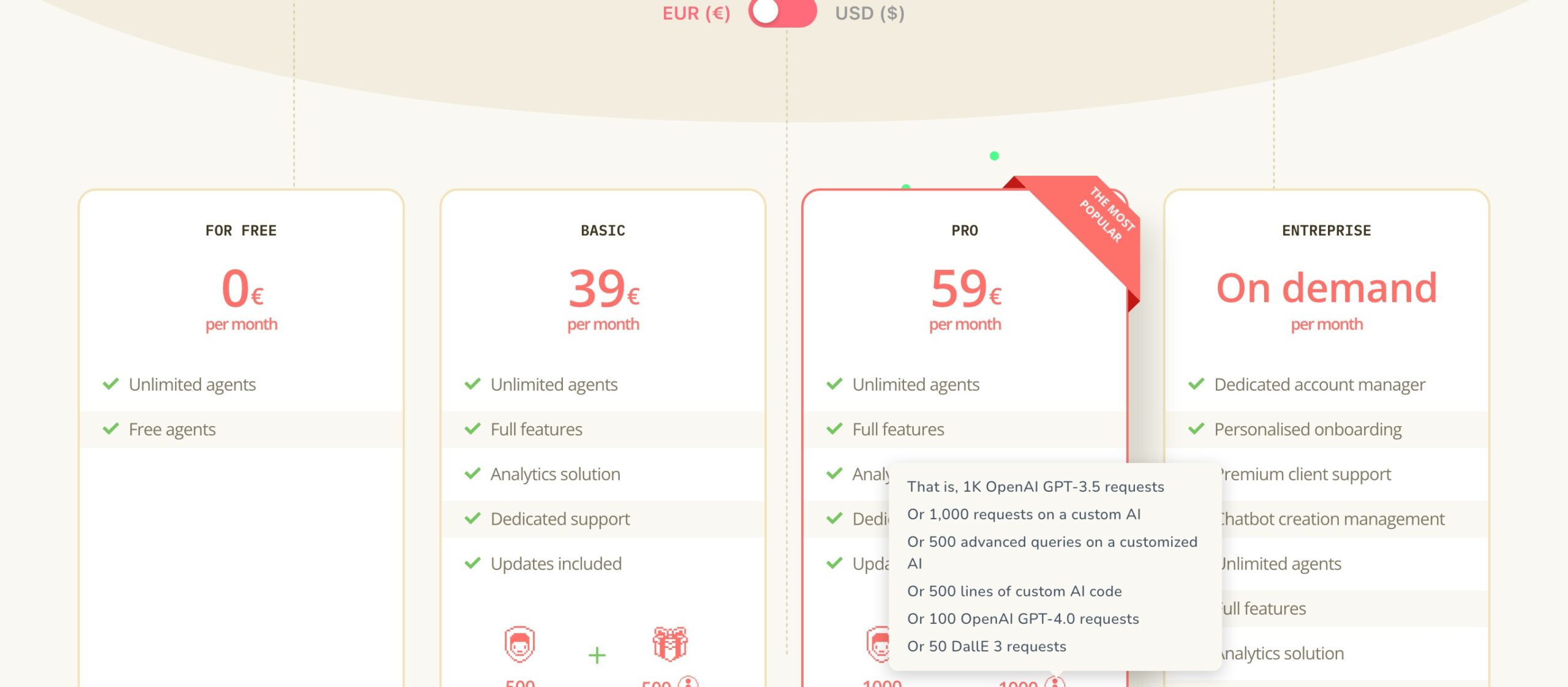
At Botnation, that variable cost takes the form of AI credits, bought in packs and consumed per request. The grid is public, which makes it possible to calculate honestly rather than quote a vague range.
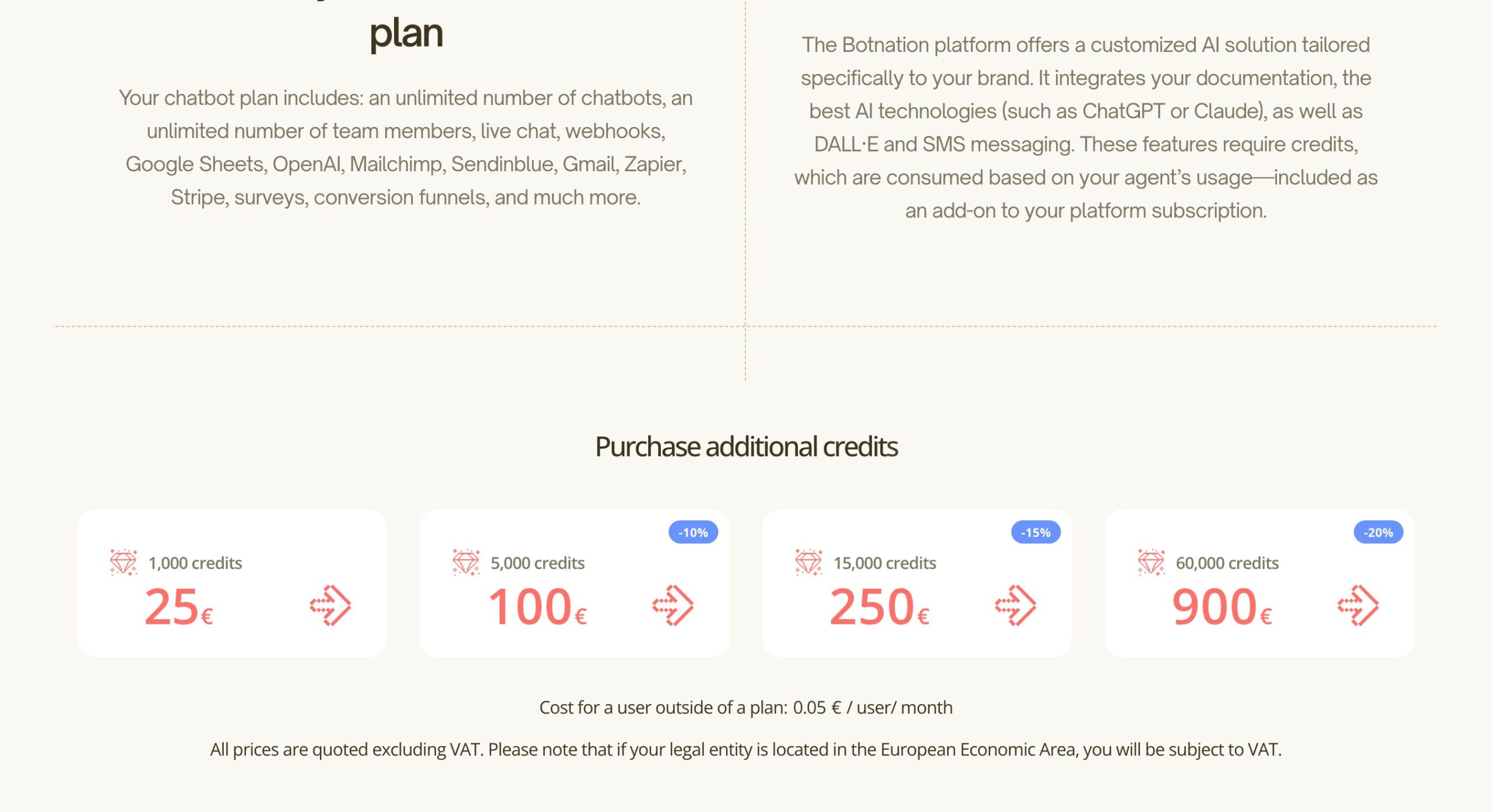
The consumption detail sits on the same page, in the tooltip attached to the free credits: 1,000 credits equal 1,000 requests on a custom AI, or 500 advanced requests, or 100 requests on a top-tier model. In other words, the choice of model multiplies the bill by ten.
Calculator: your monthly bill
Move the sliders. The calculation applies the public rates captured on 30 July 2026.
Detail: answers written by the AI, billed at the most suitable pack, that is € per credit, plus € for users beyond the plan. The credits offered on sign-up are granted once only and are not deducted here. Prices exclude VAT, Enterprise plan quoted separately.
Two lessons come out of this calculation, and they hold whatever the vendor. First, the share handed to generative AI weighs more than the number of visitors: moving that slider from 100% down to 50% halves the variable bill, without taking anything away from the experience if the scripted scenario covers the repetitive requests. Second, the choice of model is the real lever: moving from a custom AI to a top-tier model multiplies consumption by ten, for a gain that is often invisible on customer service questions.
This calculation covers a SaaS platform. Having a bespoke chatbot developed outside a subscription generally costs “between €5,000 and €30,000, and often far more”, according to Botnation’s own pricing page, which adds that these ranges remain indicative. Do not mix the two models: one is paid monthly, the other per project.
The five risks of a generative chatbot, and the guardrail for each
A badly framed generative chatbot does not break down: it keeps answering, confidently. That is what makes it riskier than a scripted bot, and it is also what gets fixed at design time.
1. Pure invention
The model fills the gaps. Guardrail: force it to answer only from passages retrieved in your content, and explicitly allow it to say “I do not know, let me pass you to an adviser”.
2. Data leakage
A visitor pastes a case number, a bank account, a medical file. Guardrail: filter what is sent to the model, never place sensitive data in the knowledge base, and record the processing in your GDPR register.
3. Runaway cost
A traffic spike or a bot hammering the widget sends consumption through the roof. Guardrail: a monthly cap, a per-visitor message limit, and an automatic fallback to the scripted scenario beyond it.
4. Tone going off the rails
A user provokes the bot until it slips, then posts the screenshot. Guardrail: explicit refusal instructions, a list of forbidden topics, and monitoring of the longest conversations.
5. Model dependency
The provider ships a new version, and the answers change with it. Guardrail: keep a set of thirty reference questions and replay it after every update, the way you would test software.
The habit that covers them all
Read twenty real conversations picked at random, every week. No dashboard replaces that reading, and it is where you spot the wrong answers no visitor ever reported.

In February 2024, the Civil Resolution Tribunal of British Columbia ordered Air Canada to compensate a passenger whose chatbot had told him a bereavement fare could be claimed retroactively, which the airline did not allow. Air Canada argued that its chatbot was “a separate legal entity that is responsible for its own actions”. The tribunal rejected that argument: the company is responsible for all the information published on its website, including anything produced by a conversational agent. Damages awarded: 650.88 Canadian dollars (Moffatt v. Air Canada, 2024 BCCRT 149).
What the law requires from 2 August 2026
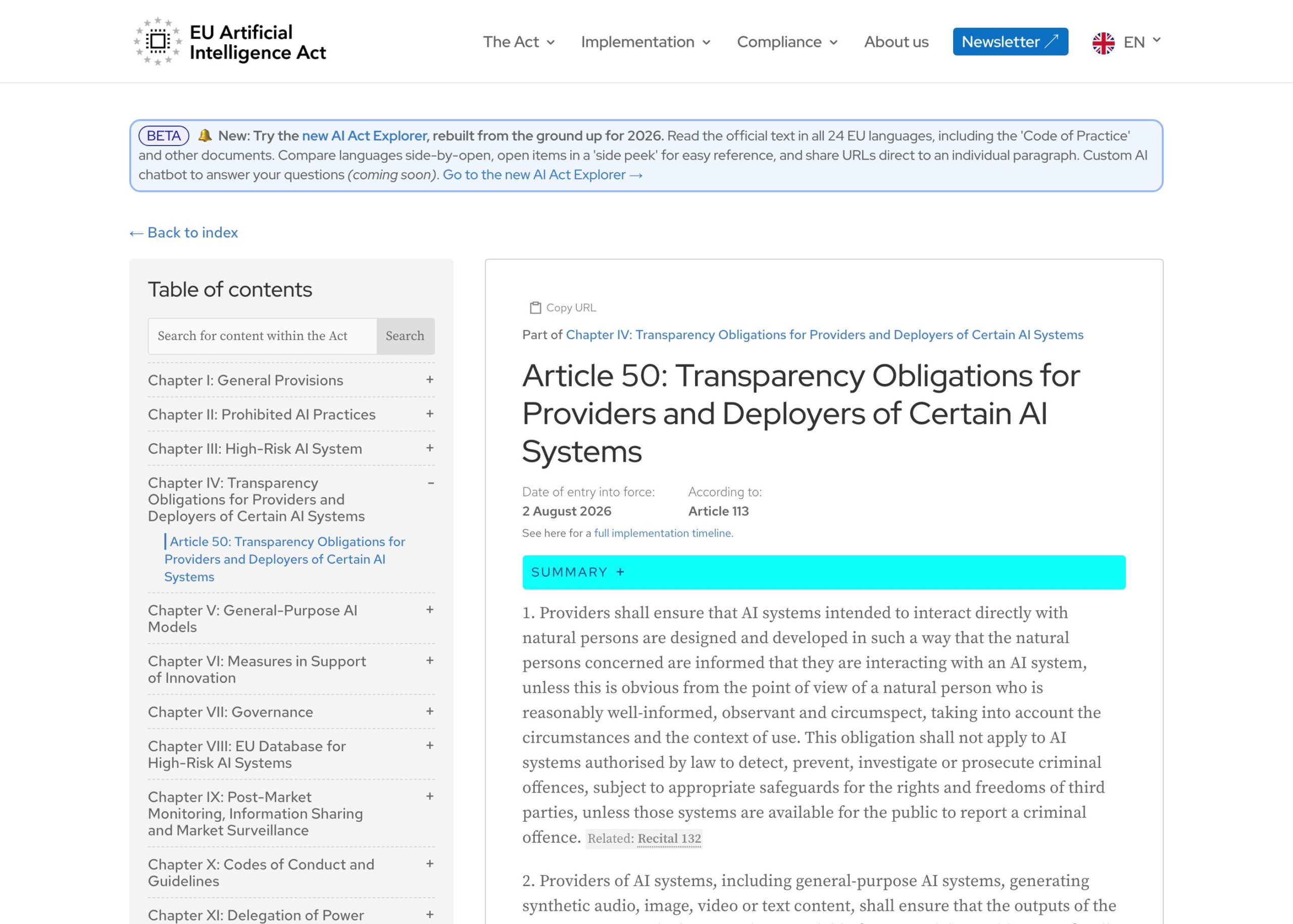
The European Artificial Intelligence Regulation, known as the AI Act, contains one article that speaks directly to any chatbot open to the public. Article 50 applies from 2 August 2026.
| What the text says | What it means for your chatbot |
|---|---|
| AI systems intended to interact directly with natural persons must be designed so that those persons are informed they are interacting with an AI system (art. 50(1)) | A visible notice on the first message, not a line buried in the terms of use. The obligation falls away only where the artificial nature is obvious to a reasonably well-informed person |
| Synthetic generated content must be marked in a machine-readable format (art. 50(2)) | Mainly concerns images, audio and video produced by your system. For conversational answer text, informing the user remains the central point |
| Fines set out in art. 99(4) | Up to 15 million euros or 3% of total worldwide annual turnover, whichever is higher |
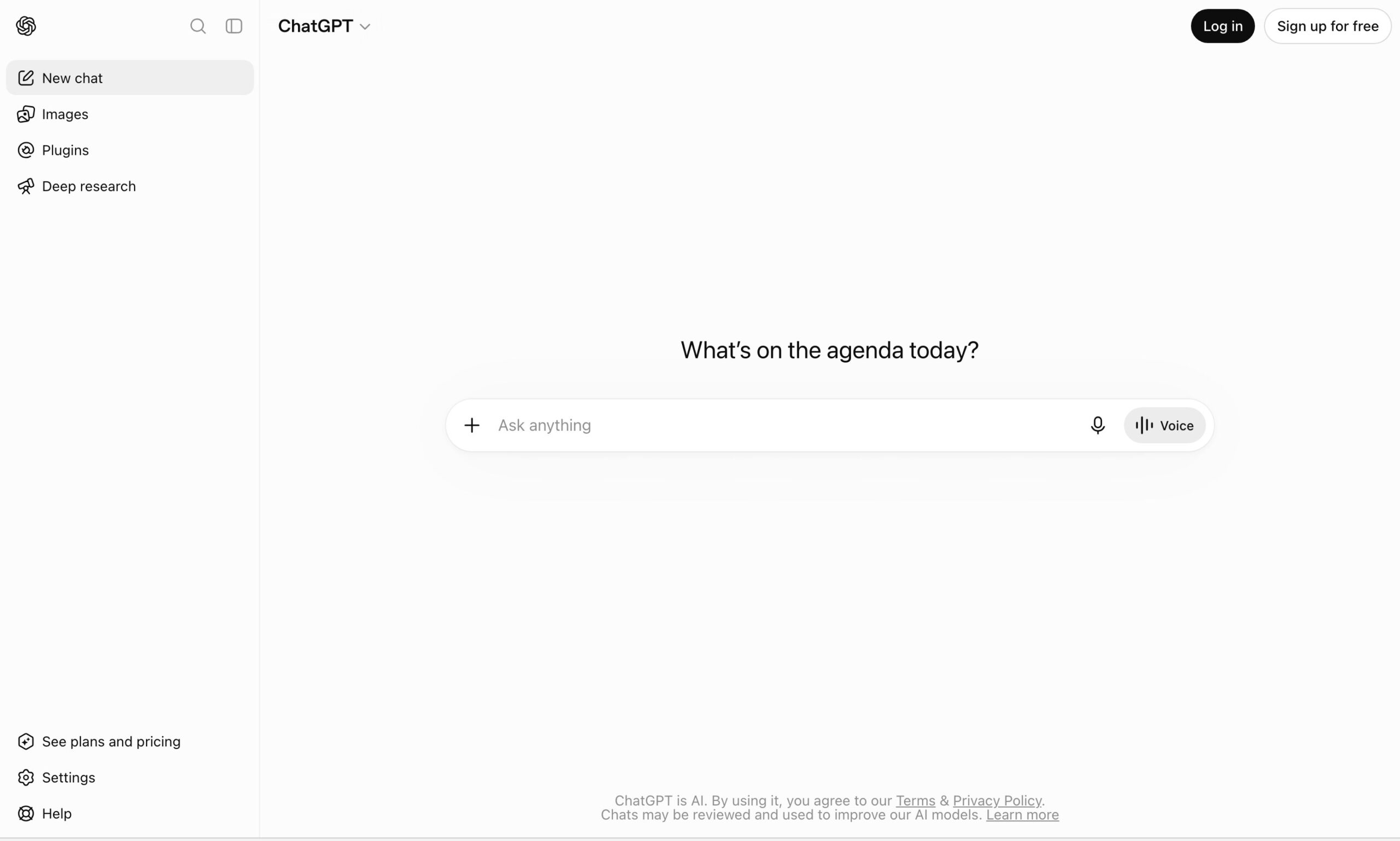
The good news is that the obligation costs one sentence. The bad news is that many widgets deployed in 2024 and 2025 do not carry it, because nobody was asking for it at the time. The big players have already built it in: ChatGPT states “ChatGPT is AI” right under its input field.

This section summarises public texts and does not replace advice from a lawyer. The applicable regime depends on your sector, the nature of the data processed and the exact use of the system. The articles quoted are those of Regulation (EU) 2024/1689, in the consolidated version published by the European Commission.
When a generative chatbot is not the right choice
Generative is not a universal upgrade. On some journeys it adds risk without adding value.
Generative is the right choice
- Your documentation is rich and the questions vary widely
- Your visitors write in free form rather than clicking
- You get many one-off questions, never the same twice
- You handle several languages without wanting to maintain several scenarios
- The topic tolerates an approximate answer with a handover to a human
Stay with scripted
- The journey is a form in disguise: quote, appointment, booking
- A wrong answer commits you on a price, a lead time or a right
- The field is regulated: health, credit, insurance, data about minors
- Volume is low: a few dozen questions cover 90% of cases
- You have no clean, up-to-date reference content yet
The best test fits in one sentence: if you would not accept a first-week intern answering that question alone in front of a customer, do not hand it to a generative model without supervision. The classic mistakes of a first chatbot almost all show up here.
The four ways to deploy a generative AI chatbot
The phrase “generative AI chatbot” covers very different projects depending on the starting point. Here are the four routes actually available in 2026, and what each of them demands.
| Route | What it is | Skills required | What you gain, what you lose |
|---|---|---|---|
| Consumer assistant | ChatGPT, Claude, Gemini, Mistral, used directly | None | Free or cheap, instant. But this is not your chatbot: it is not on your site, not fed with your content, not under your control |
| No-code platform | A visual editor combining scenarios and a generative layer, published on your channels | No development | Live in a few days, data attached to your account, readable cost. The platform’s framework applies |
| Custom development | An agent built on a model API and a vector database | A dedicated technical team | Total freedom. A permanent maintenance load, and a project budget rather than a subscription |
| Turnkey service | A team designs and delivers the chatbot for you | None, on the client side | Fastest when internal resources are missing. Check who keeps control of the account after delivery |
Our comparison of chatbot apps covers the first route, and our guide to choosing an AI chatbot agency covers the last one.
Building your generative AI chatbot in six steps

- List thirty real questions. Take them from your emails, your tickets, your inbox. Not invented questions: questions that were actually asked, typos included. That set will later serve as your regression test.
- Gather your reference content. FAQ, terms and conditions, product sheets, procedures. Remove outdated versions: stale content produces a wrong answer, and nobody will catch it.
- Draw the boundary. Decide what stays scripted (orders, appointments, complaints, personal data) and what the AI may handle freely. That boundary is your main tool for controlling both risk and cost.
- Write the instructions. Role, tone, language, answer length, forbidden topics, fallback sentence, handover condition. One page is enough, and it beats three weeks of tuning.
- Test against your thirty questions. Score every answer: accurate, incomplete, wrong. A wrong answer is almost always fixed in the source content, not in the model.
- Publish, then read. Go live on one channel first, measure the handover rate to a human, read twenty conversations a week, and correct. A generative chatbot is a living product, not a delivery.
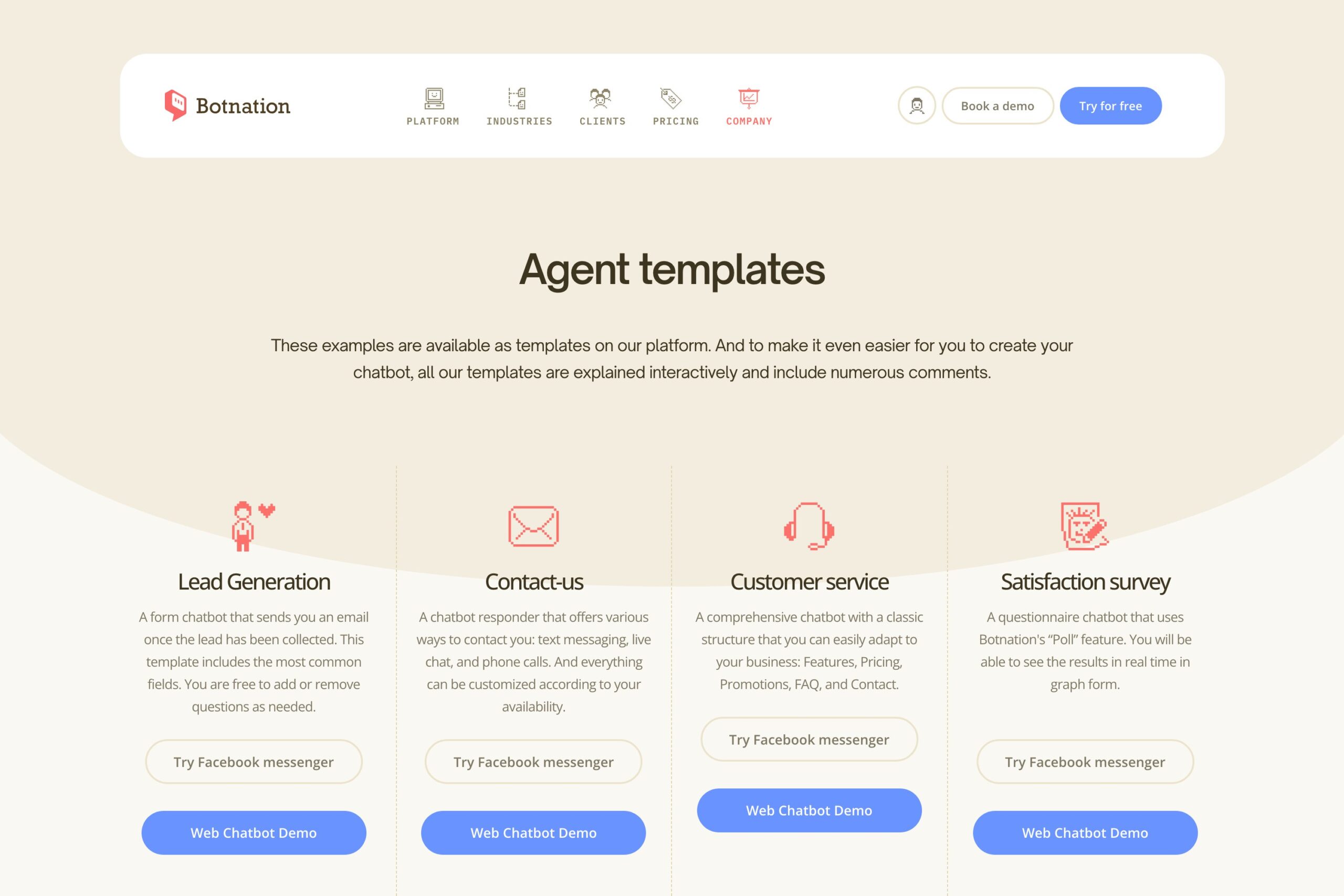
At Botnation, those six steps can be handled in two ways. The no-code platform lets you build everything yourself: visual scenarios, a custom AI fed with your documentation, publication on your website, WhatsApp, Messenger or Instagram. And for projects with no internal resource to spare, our chatbot creation experts build the bespoke bot as part of the Enterprise plan, quoted individually. Either way, the account, the scenarios and the knowledge base stay in the client’s name, and the team that builds is the team that develops the platform.
Start with a single use case and a single channel. A generative chatbot plugged into a company’s entire documentation on day one mostly produces average answers everywhere. A bot that answers delivery questions perfectly, and hands over for everything else, earns the team’s trust in two weeks. That is also what the deployments described in our article on the internal company chatbot show.
Frequently asked questions
What is the difference between a chatbot and generative AI?
They are not comparable objects. The chatbot is the interface: a conversation window placed on a site, an app or a messaging service. Generative AI is a text production technology. A chatbot can run without generative AI (scenarios, keywords, intents), and generative AI serves plenty of purposes beyond chatbots. A generative AI chatbot is simply the combination of the two.
What is an AI chatbot?
An AI chatbot is a conversational agent that understands natural language instead of relying on buttons. The phrase covers two generations: intent-recognition bots, which classify your sentence to pick a pre-written answer, and generative bots, which write the answer. Both are sold under the same name, hence the frequent confusion. Our article what is a chatbot goes through the definitions.
What is the best free AI chatbot?
The question splits in two. To chat with an AI, every consumer assistant offers a free tier, and ChatGPT and Perplexity can even be used without an account. To install a chatbot on your own site, free applies to the platform subscription: Botnation offers a €0 plan with an unlimited number of chatbots, generative features being counted in credits. No serious offer provides unlimited free generated answers, since every answer has a real computing cost.
What is the difference between ChatGPT and a business chatbot?
ChatGPT is a general-purpose assistant, hosted by its publisher, answering from what it learned across the web. A business chatbot is connected to your content, published on your channels, constrained by your instructions, and it hands over to your teams. Technically the second can use the first as an engine. What makes the difference is the content and the framing, not the model.
Can a generative AI chatbot invent answers?
Yes, and that is its default behaviour: a language model produces the most plausible sequence of words, not the most accurate one. The risk drops sharply when you force it to rely on passages retrieved from your content, explicitly allow it to admit ignorance, and hand over to a human as soon as a topic commits you on a price, a lead time or a right. It never disappears entirely, which is why regular reading matters.
Do you have to tell users they are talking to an artificial intelligence?
Yes. Article 50 of the European AI Regulation, applicable from 2 August 2026, requires that people be informed they are interacting with an AI system, unless this is obvious to a reasonably well-informed person. In practice, a clear notice on the first message settles the matter, and it improves the relationship rather than damaging it: the visitor adjusts their expectations.
How long does it take to put a generative chatbot live?
On a no-code platform, the technical part takes hours. The real delay comes from preparing the content and running the tests: count one to three weeks for a clean first use case, more if the documentation has to be rewritten. Projects that drift are almost always the ones that tried to cover every topic at once.
Does a generative chatbot replace customer service?
No, and deployments that promise it end badly. It absorbs repetitive questions and out-of-hours requests, which frees human time for the complex cases. The right indicator is not the raw automation rate but the handover rate combined with satisfaction: a bot that hands over 30% of conversations at the right moment beats a bot that never hands over at all.
What to take away
A generative AI chatbot is not a classic chatbot done better: it is a different object, with other strengths and other risks. It understands what nobody planned for, and that is precisely why you must decide, in advance, what it is not allowed to say.
The three decisions that matter fit in one line each. What share of conversations to hand it, since that sets the cost. Which content to ground it in, since that sets the accuracy. And at what point it hands over, since that moment is what protects the company. Everything else is tuning.
Test a generative AI chatbot on your own content
Botnation’s free plan lets you build a chatbot with no credit card and an unlimited number of bots. Custom AI features are counted in credits, and the grid is public.
Sources. Regulation (EU) 2024/1689 on artificial intelligence, Articles 50 and 99, text and application timeline consulted on artificialintelligenceact.eu on 30 July 2026. Insee, “Information and communication technologies in enterprises in 2025”, Insee Première no. 2120, July 2026. Moffatt v. Air Canada, 2024 BCCRT 149, Civil Resolution Tribunal of British Columbia, 14 February 2024. Rates and credit grid captured on botnation.ai/en/pricing/ on 30 July 2026.